0
-
An empty cart
You have no item in your shopping cart


A Brief Analysis of Seven Major Applications of AGVs
my country’s logistics system is developing rapidly, at a pace that can be described as a thousand times faster. To support this, Dongguan Tuling Robotics is also fully committed to developing new AGV products. Only by keeping pace with the times can we remain invincible. Below, I will briefly discuss the applications of AGVs in seven key areas, including industry, mining, healthcare, transportation, metallurgy, product assembly, and many other industries. They can replace and assist workers in unloading and moving goods in basic warehouses and various types of logistics terminals. AGVs are highly adaptable to their environments and are immune to common interference, making them very user-friendly and highly operational.
1. Applications in the Automotive Manufacturing Industry:
AGVs can be used in the automotive manufacturing industry for auto parts production and engine assembly. Traditional assembly methods are slow and inefficient. Their introduction can enhance the intelligence of entire production lines, making the work of production employees less arduous. In the future, they will add many more functions, making them a valuable assistant for workers. Developed Western countries adopted AGVs earlier and are more advanced in the automotive industry than my country. We still have much to learn and catch up to, especially in the area of fully intelligent material handling. This is because the routes and distances covered by AGVs are far more complex and challenging than a simple assembly line loop. This requires optimizing control systems and managing the coordinated transport operations of numerous AGVs. Therefore, there is still a long way to go.
Second, Warehouse Storage and Transportation Applications:
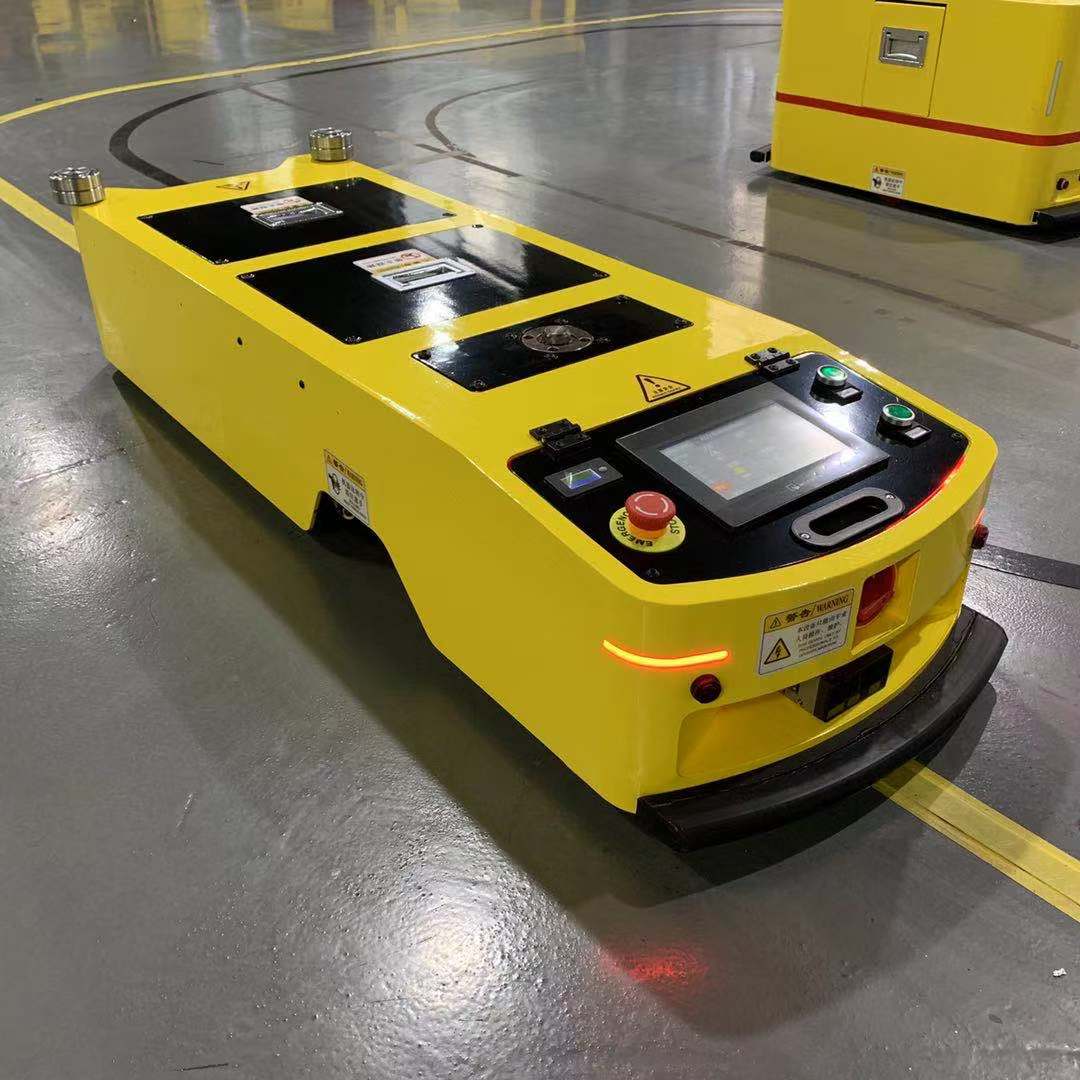
AGVs were initially most successful in the goods warehousing industry. Globally, it is estimated that over 20,000 AGVs are in use in various warehouse environments. In a certain group’s multi-story warehouse, which began operation in 2002, 18 AGVs form an intelligent, fully automated warehouse handling system, enabling smooth daily handling of the heavy lifting of moving goods and parts in and out of the warehouse.
3. Applications in Numerous Manufacturing Industries:
Today’s manufacturing industry competes on efficiency and technology. Automated Guided Vehicles (AGVs) are used in manufacturing to quickly and efficiently complete material handling and installation tasks. Especially with the current refinement of production processes, fully intelligent and flexible adjustments to transport routes are possible, significantly improving production stability and the viability of production plants. As early as 1975, a German car brand implemented a fully intelligent automated assembly line using AGVs as transport vehicles to enhance the reliability of its safety systems. These lines reduced installation time by 25%, production issues by 49%, capital recovery time by 65%, and the number of workers by 10%. Currently, AGVs are widely used in the manufacturing and assembly lines of General Motors, Toyota, and Volkswagen.
4. Flexible Applications in Various Locations:
AGVs are used in public spaces such as megaport terminals, large supermarkets, post offices, and various airports. These locations transport large quantities of goods, require high mobility, and require frequent adjustments to operational processes, yet the handling tasks are relatively simple. Therefore, AGVs are well-suited for these types of operations. Their intelligent automation is precisely what we call them, making them ideal for these types of locations.
5. AGV Applications Make Industries More Environmentally Friendly
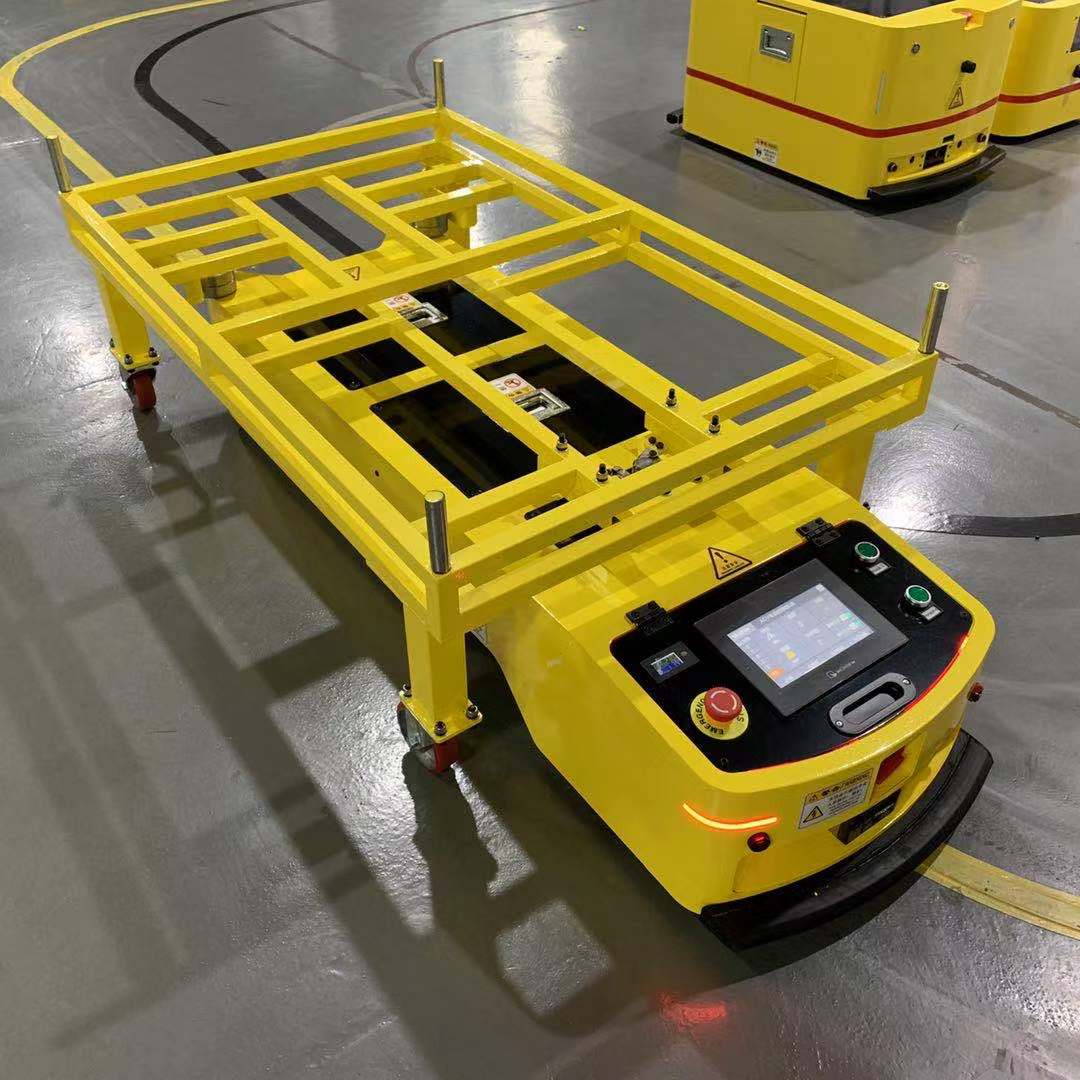
AGVs are used in industries such as tobacco, food processing, chemicals, and pharmaceutical production, all of which have high requirements for certain handling operations. Environmental protection, pollution-free operation, and zero emissions are essential. Laser AGVs are a high-quality, highly efficient type. For example, many tobacco companies in my country are already using laser AGVs.
6. Applications in Various Special Industries:
AGVs are used in specialized occupations and hazardous locations. Because AGVs possess autonomous driving capabilities, they are virtually multifaceted. They are used in military applications such as detecting and dismantling specialized equipment, battlefield mine clearance, and position reconnaissance, possessing a multitude of skills. For example, in steel mills, AGVs can transport furnace materials, reducing the labor intensity often associated with labor. In nuclear power plants and areas requiring fresh food storage and preservation, AGVs are used to transport goods, significantly reducing the risk of radiation.
7. Future Outlook: AGVs Showcase Their Potential:
In the future, AGVs will be applied to specialized areas of life, adding fuel to our lives and adding a new dimension to our lives.
Through the seven areas of application of AGVs in the industries listed above, we can see that AGVs have penetrated every corner of our lives and work.
