
Applications and Industry Analysis of Bin Automated Stacker Crane Warehouse Systems
Bin Automated Stacker Crane Warehouse Systems: A Key Solution for Smart Warehousing
With the rapid advancement of intelligent manufacturing and automated logistics, traditional manual warehouses can no longer meet modern enterprises’ demands for higher efficiency, greater accuracy, lower operating costs, and intelligent inventory management. Bin Automated Stacker Crane Warehouse Systems (Bin AS/RS) have become a preferred solution for smart warehousing across industries such as electronics, automotive, 医薬品, e-commerce, and new energy, thanks to their high-density storage, automated handling, インテリジェントな倉庫管理.
What is a Bin Automated Stacker Crane Warehouse System?
A Bin Automated Stacker Crane Warehouse System is an intelligent storage solution that uses standardized bins, totes, or plastic containers as storage units. By integrating high-speed stacker cranes, conveyor systems, vertical lifts, robots, and intelligent Warehouse Management Systems (WMS) and Warehouse Control Systems (WCS), the system enables fully automated storage, 検索, ピッキング, and material distribution.
The system supports:
- Automatic receiving
- 自動保管
- Automatic retrieval
- Real-time inventory counting
- 自動補充
- Seamless integration with ERP and MES systems
- 24/7 unattended operation
Compared with traditional warehouses, it significantly improves warehouse efficiency, 在庫精度, and operational management.
Key Advantages
1. Maximize Storage Space Utilization
By utilizing high-rise storage racks, the system fully leverages vertical warehouse space.
利点
- Increase storage capacity by 2–5 times
- Improve warehouse space utilization by 40%–70%
- Reduce land and building investment costs
2. High-Speed Storage and Retrieval
High-speed bin stacker cranes provide fast travel speeds and precise positioning, enabling rapid storage and retrieval operations.
利点
- Faster response to production demands
- Shorter order fulfillment cycles
- Ideal for high-frequency, small-batch operations
3. Reduce Labor Costs
Traditional warehouses rely heavily on manual handling, searching, and inventory counting.
Automated warehouse systems enable:
- Minimal labor requirements
- Unattended operation
- Fully automated material handling and storage
Many companies reduce warehouse labor costs by 50%–80%.
4. Improve Inventory Accuracy
Integrated with barcode, RFID, and WMS technologies, the system provides:
- Automated inventory management
- Real-time inventory updates
- Automatic cycle counting
Inventory accuracy can reach over 99.9%.
5. Enhance Production Efficiency
The system can be directly connected to production lines, enabling:
- Automatic material delivery
- 自動補充
- ジャストインタイム (ジット) material supply
This minimizes production downtime and improves overall manufacturing efficiency.
Industry Applications
1. Electronics Manufacturing
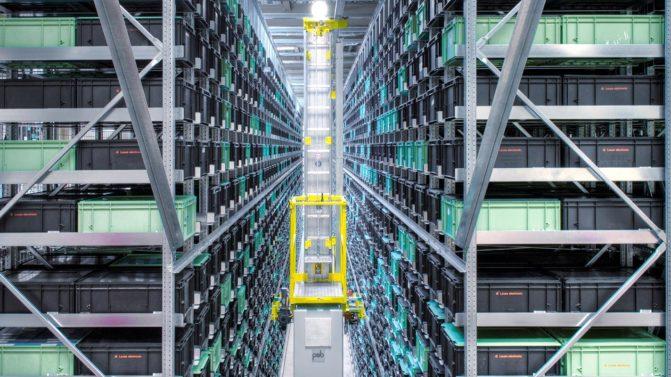
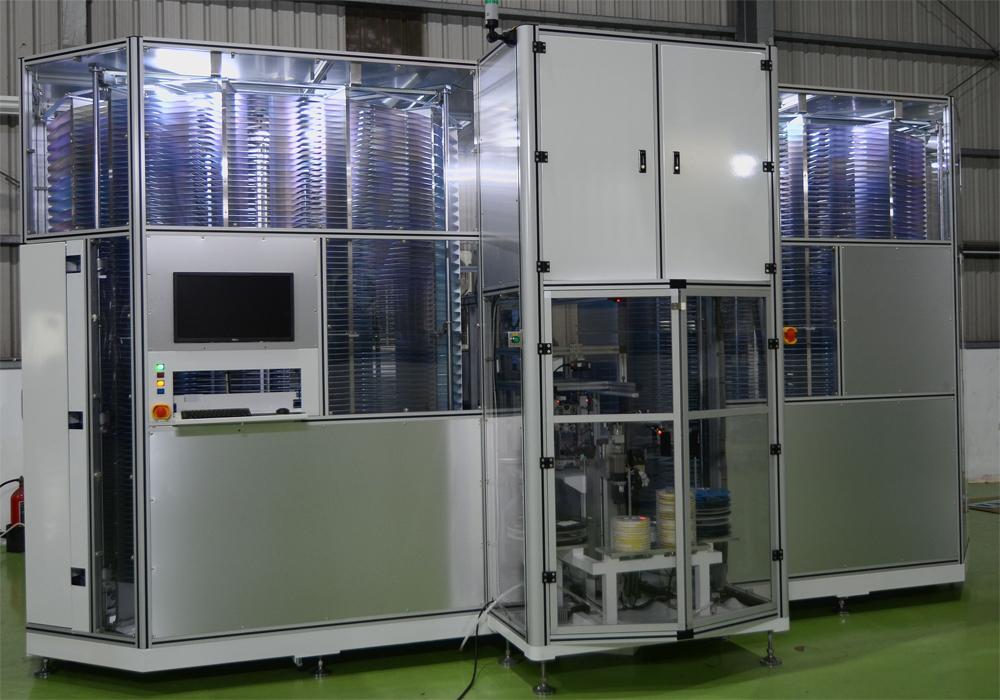
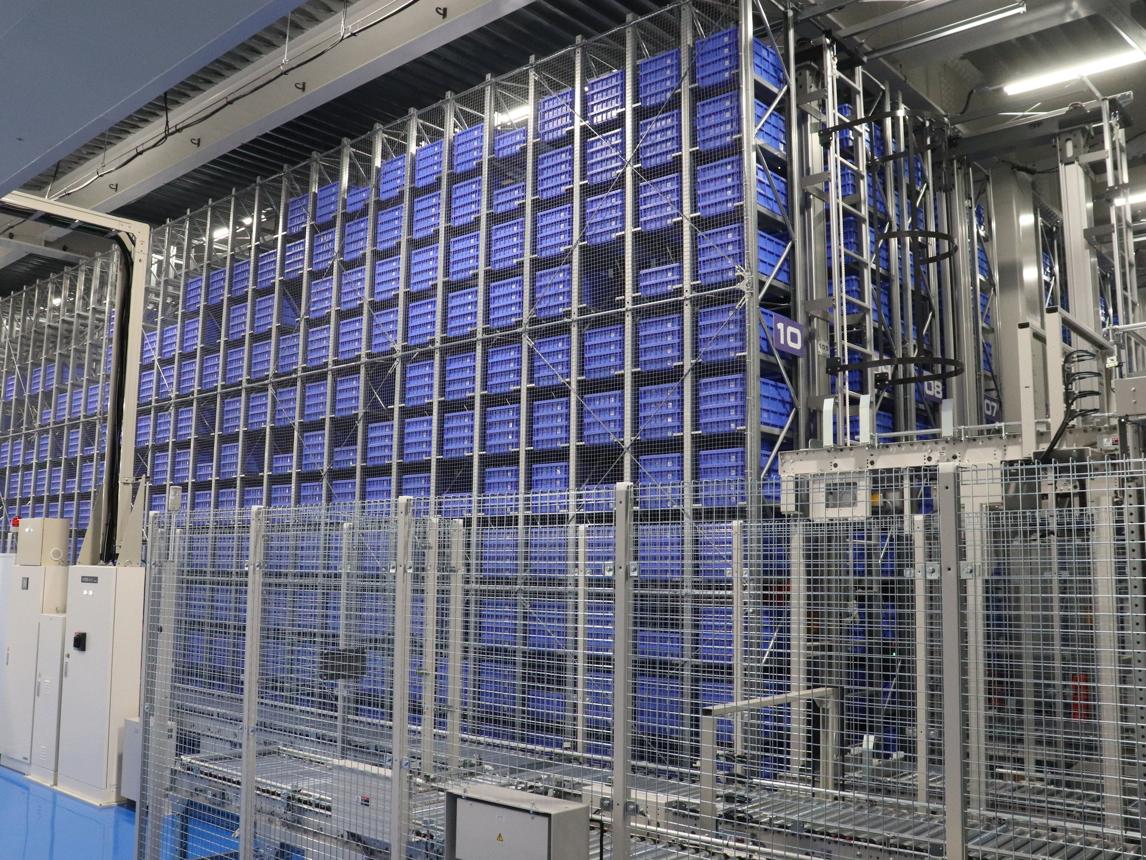
The electronics industry features thousands of SKUs, compact products, and high-value components that require highly accurate inventory management.
Typical Stored Products
- Printed Circuit Boards (PCBs)
- Integrated Circuits (ICs)
- Electronic Components
- SMT Materials
- Connectors
- Wire Harnesses
利点
- Automated material preparation
- Accurate material distribution
- Error-proof inventory management
- 先入れ, 先出し (FIFO) inventory control
- Seamless integration with MES systems
2. Automotive Manufacturing
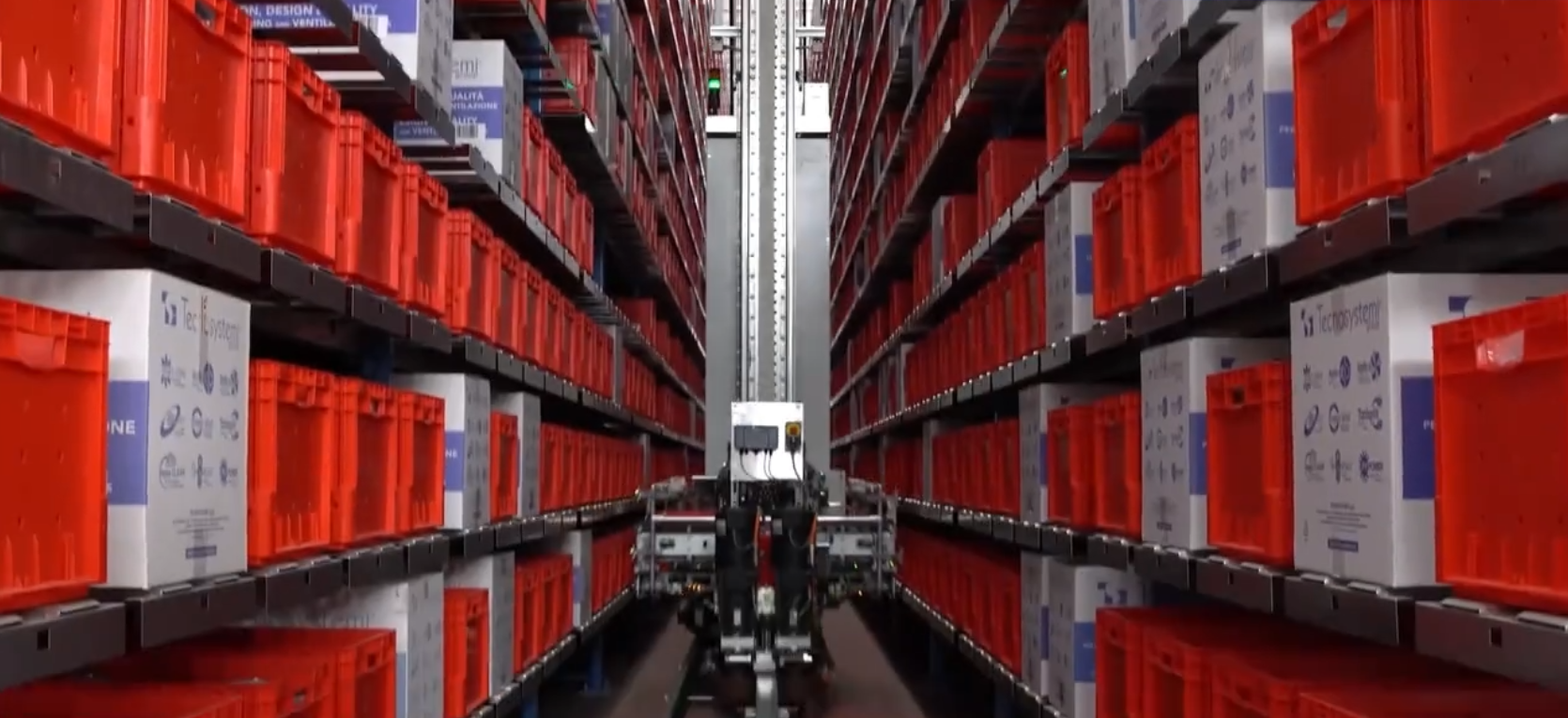
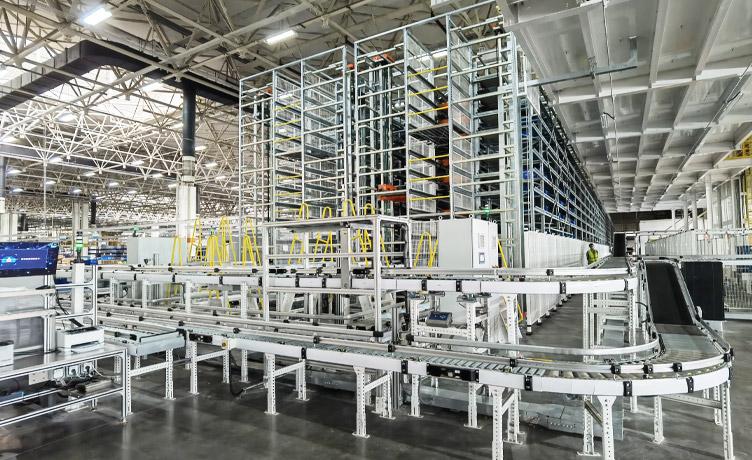
Automotive production involves thousands of different components and requires highly efficient material logistics.
Typical Stored Products
- Engine Components
- Electrical Parts
- Fasteners
- Bearings
- Small Assembly Parts
利点
- Automatic material supply
- AGV-based material transportation
- ジャストインタイム (ジット) production support
- Increased assembly line efficiency
3. New Energy Industry
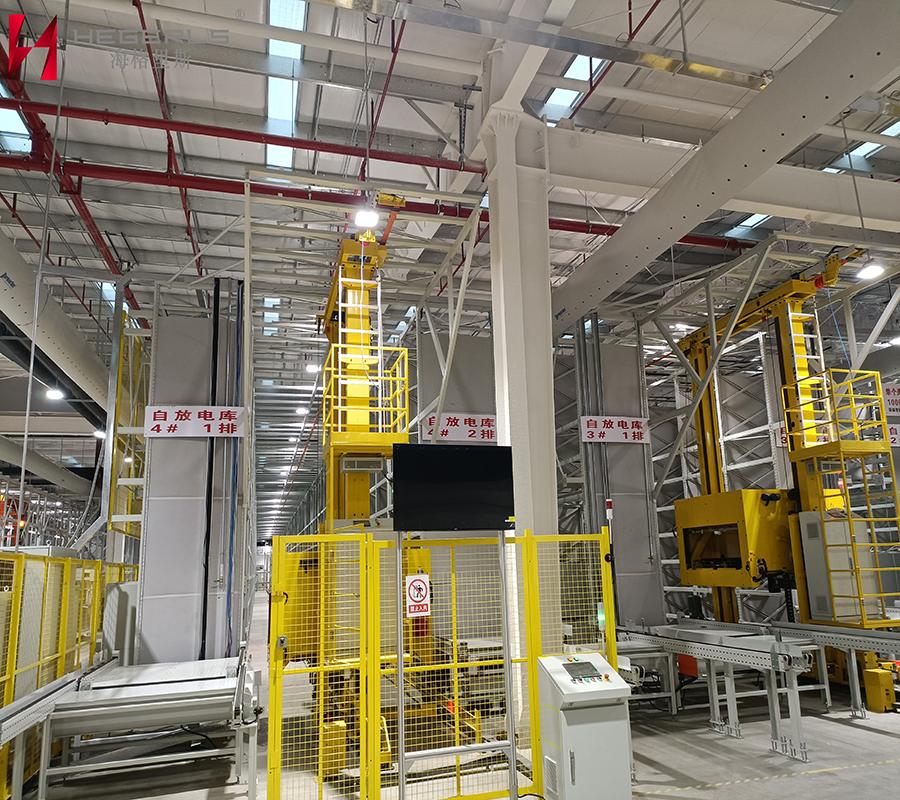
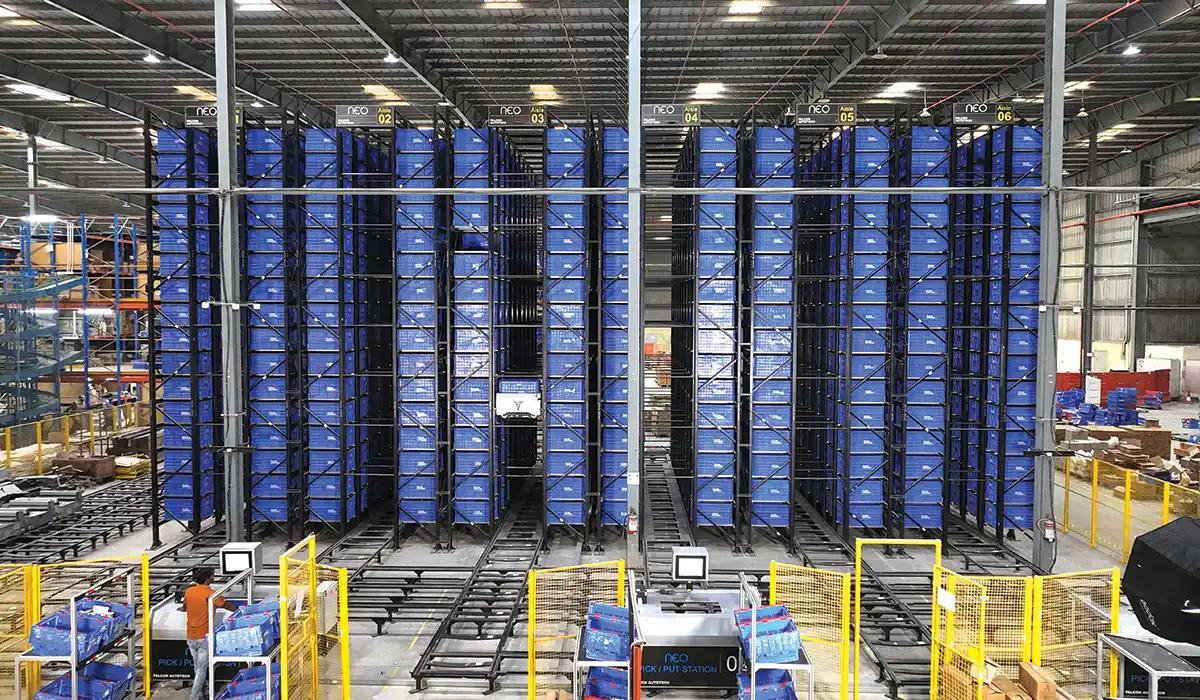
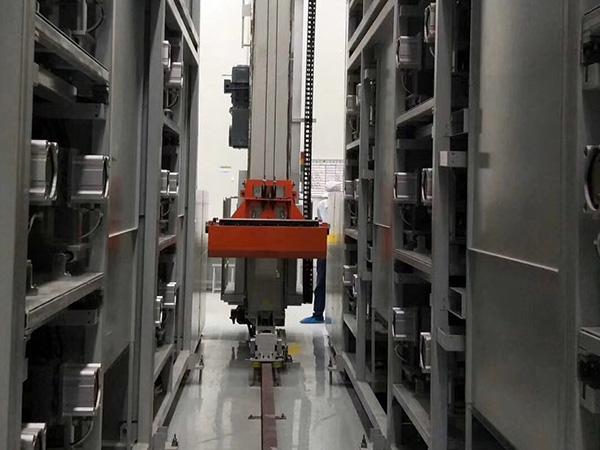
The rapid growth of the new energy sector has significantly increased demand for intelligent warehouse automation.
Typical Stored Products
- Battery Cells
- Battery Module Components
- Battery Management System (BMS) Parts
- Precision Components
利点
- Complete traceability
- Batch management
- Improved operational safety
- Reduced manual handling
4. Pharmaceutical Industry
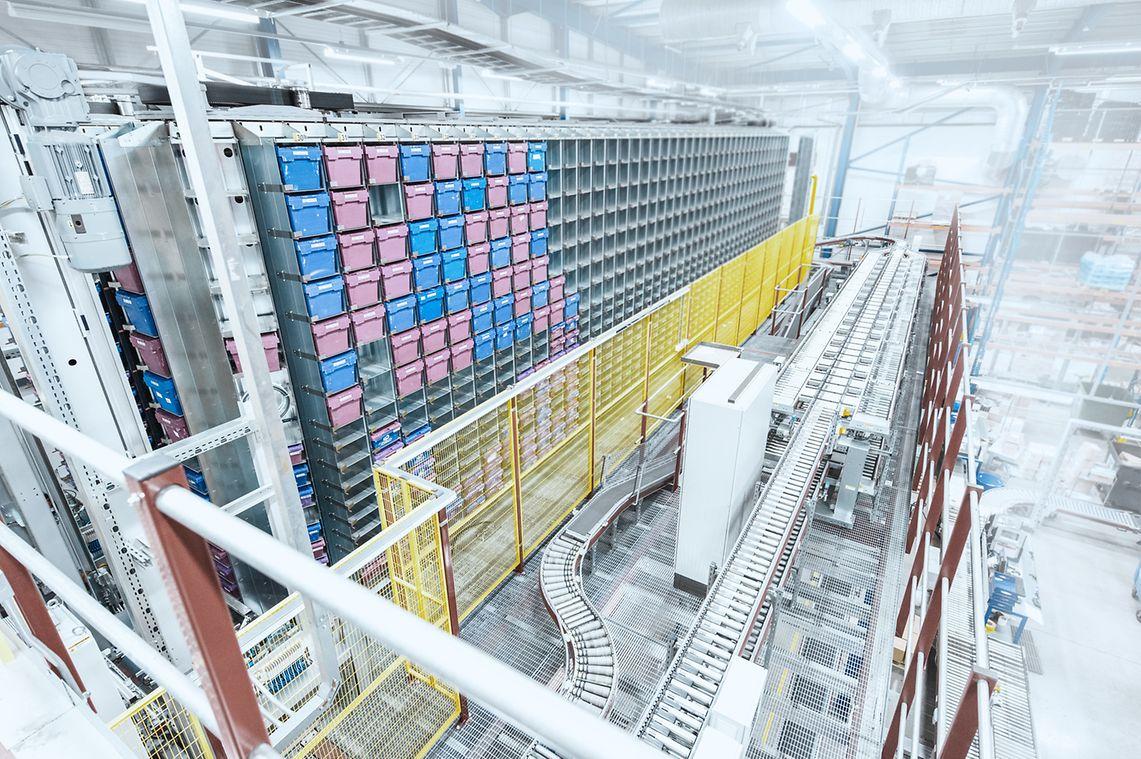
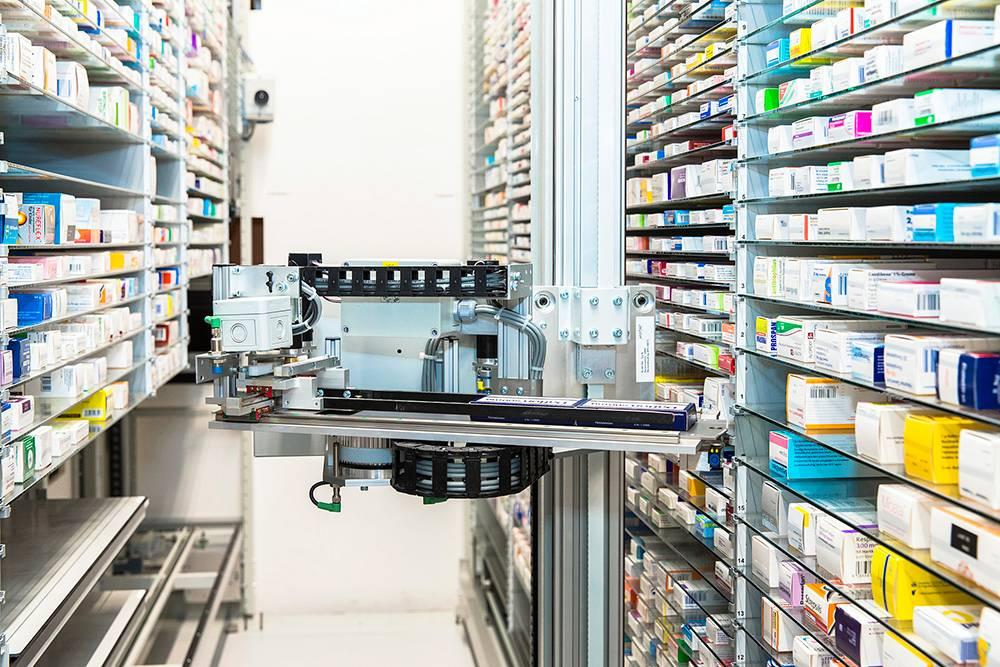
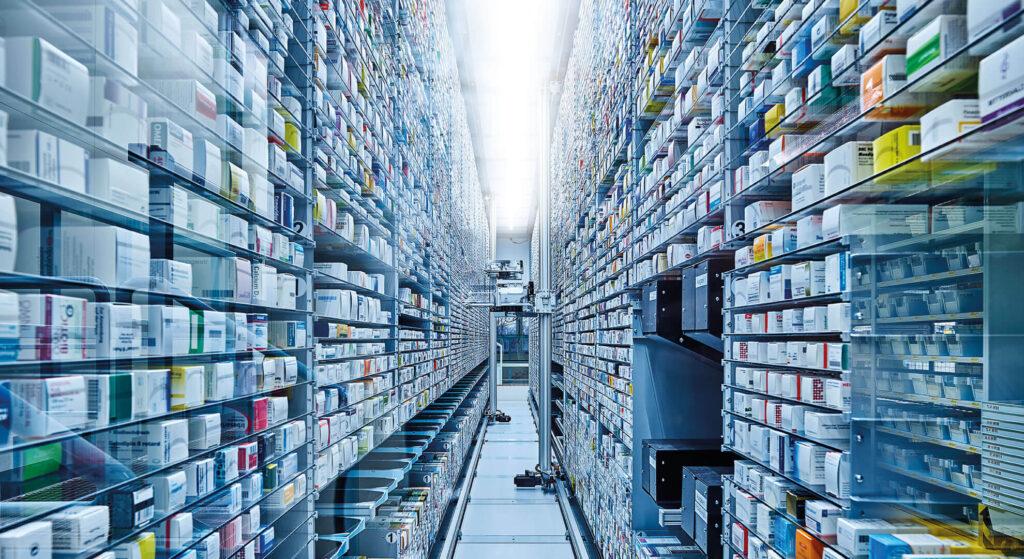
The pharmaceutical industry requires strict temperature control, バッチトレーサビリティ, 規制遵守と.
Typical Stored Products
- Medicines
- Medical Devices
- Packaging Materials
- Diagnostic Reagents
利点
- GMP-compliant warehouse management
- バッチおよびロットのトレーサビリティ
- FIFO inventory management
- Automated inventory counting
- 完全な製品トレーサビリティ
5. E-commerce and Retail Distribution Centers
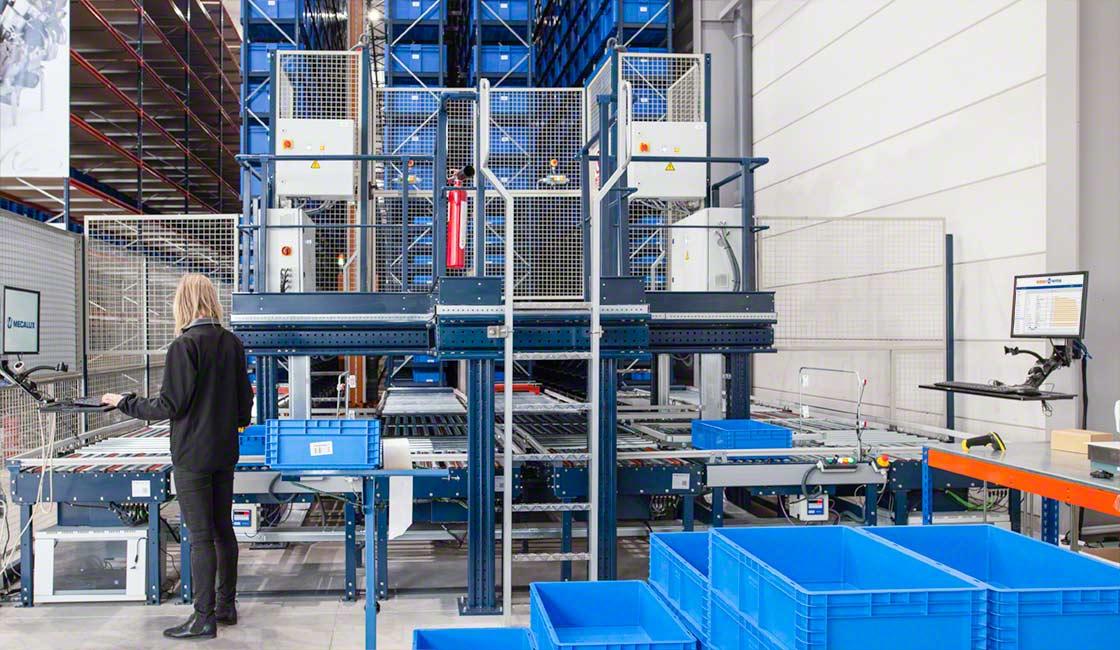
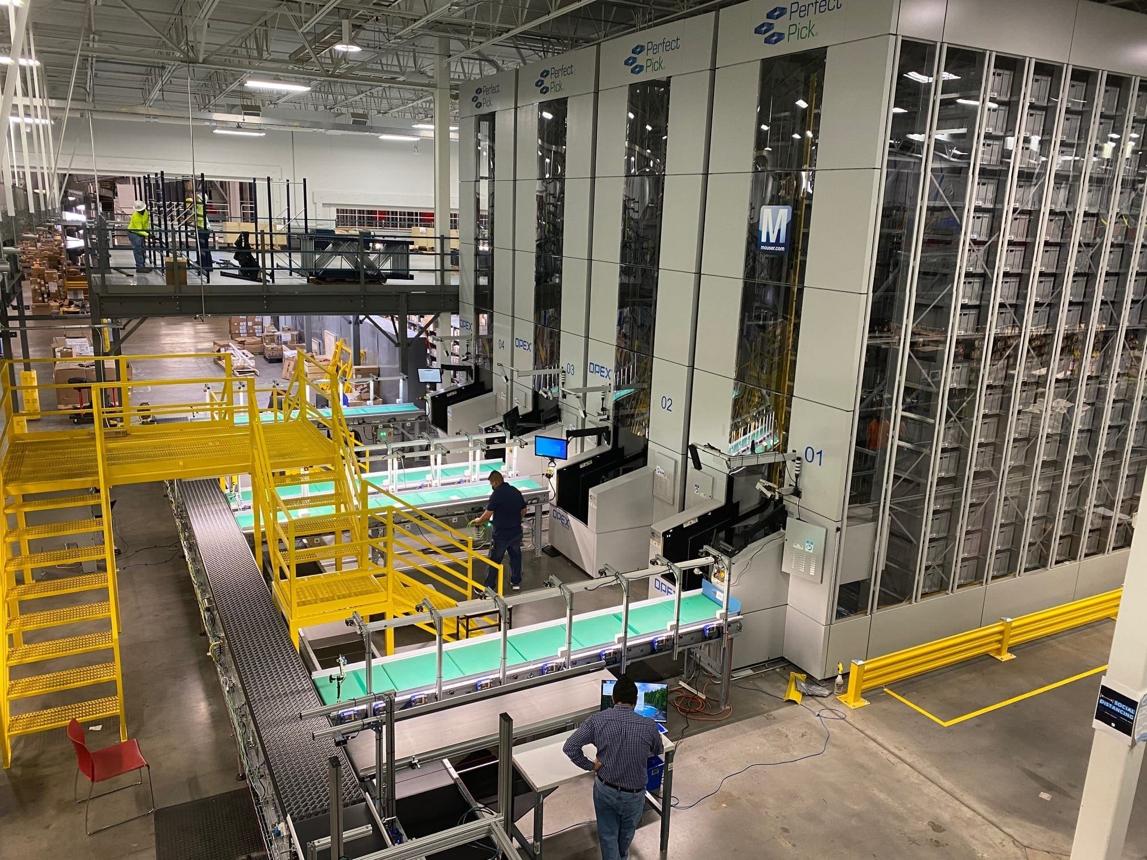
Modern e-commerce warehouses handle massive SKU volumes and high-frequency order fulfillment.
利点
- Goods-to-Person picking
- High-speed order processing
- 自動補充
- Simultaneous multi-order fulfillment
- Reduced picking errors
6. Semiconductor Industry
The semiconductor industry requires ultra-clean environments, ESD protection, and highly precise inventory management.
Typical Stored Products
- Wafer Carriers
- Semiconductor Chips
- IC Devices
- Precision Electronic Materials
利点
- ESD-safe warehouse design
- Automated product tracking
- Full warehouse visibility
- Reduced contamination risks
- Secure management of high-value materials
Future Development Trends
Driven by Artificial Intelligence (AI), Digital Twin technology, Industrial Internet of Things (IIoT), およびロボット工学, Bin Automated Stacker Crane Warehouse Systems are evolving toward greater intelligence and flexibility.
Future trends include:
- AI-powered warehouse scheduling for higher equipment utilization
- Digital Twin technology for real-time monitoring and warehouse simulation
- Deep integration with AGVs, amrs, and robotic arms for flexible intralogistics
- Cloud-based WMS for centralized multi-site warehouse management
- Big data analytics for intelligent inventory forecasting and automatic replenishment
結論
A Bin Automated Stacker Crane Warehouse System is more than just an automated storage solution—it is a critical infrastructure for smart manufacturing and digital supply chain transformation.
By maximizing storage density, improving logistics efficiency, reducing labor costs, and enhancing inventory accuracy and traceability, it delivers significant operational advantages across industries including electronics, automotive, new energy, 医薬品, semiconductors, と電子商取引.
As global manufacturers continue to pursue Industry 4.0 and smart factory initiatives, investing in a Bin Automated Stacker Crane Warehouse System enables businesses to optimize warehouse operations, improve productivity, 運用コストを削減する, and build a more competitive, intelligent, and future-ready supply chain.