0
-
An empty cart
You have no item in your shopping cart

Product Description
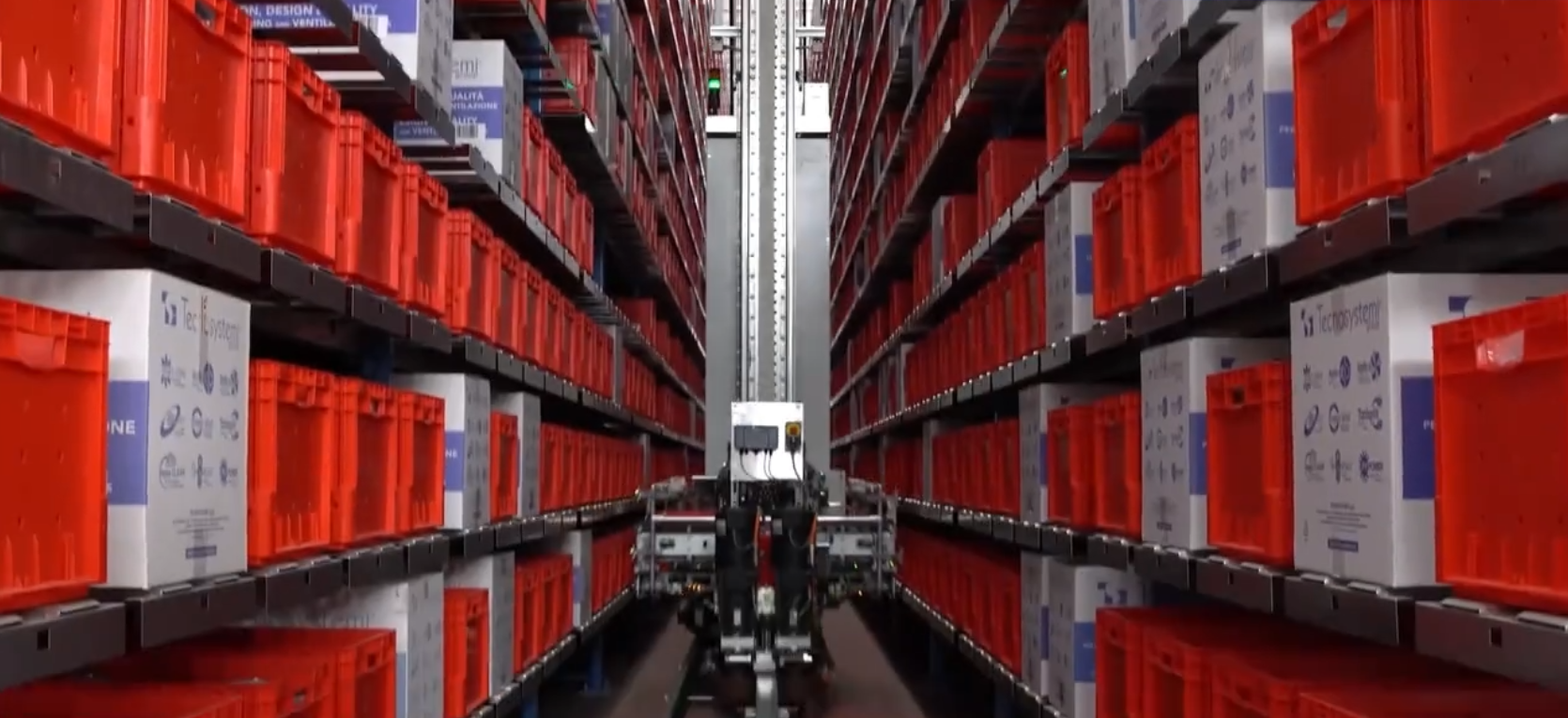
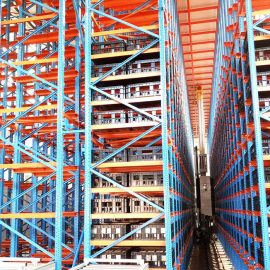
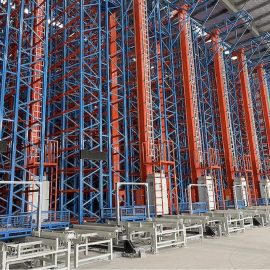
The intelligent multi-level shuttle dense storage system consists of multiple high-speed shuttles that store and retrieve goods (boxes) on dedicated rack units, elevators, a box conveyor system, sorting lines, a WMS management system, and a WCS control system. This is a new automated storage model that integrates “goods-to-person” sorting and dense storage. Compared to traditional mini-OD systems, it is more advanced and efficient and suitable for automated storage of box logistics. The multi-level shuttle system can store goods (boxes) in single- or double-depth, two-way, or four-way configurations. It is widely applicable to lightweight box logistics in automotive parts, electronics, biopharmaceuticals, and other industries.

Product Data
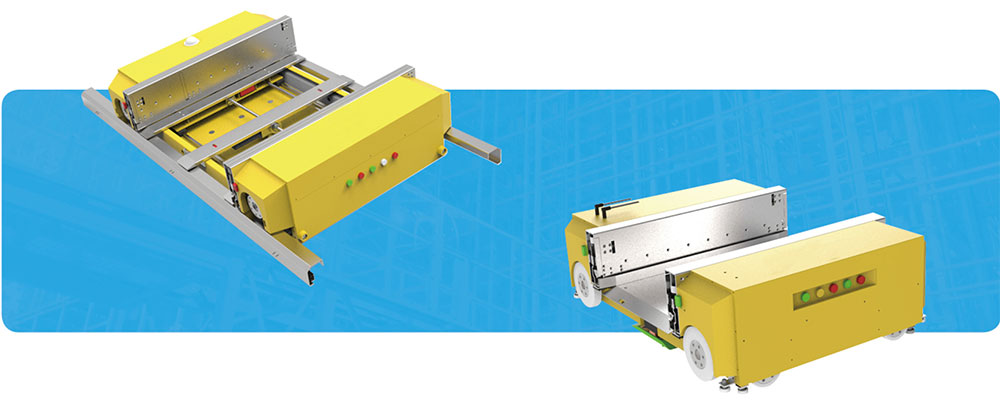
Multi-Shuttle (Two-Way/Four-Way):
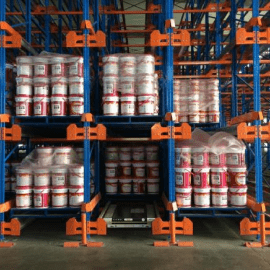
The Multi-Shuttle provides fast and scalable material handling in both the horizontal and vertical directions, and can handle transfer cases or cartons weighing up to 50 kg. Its highly compact design reduces floor space by 30%-50% compared to conventional solutions. The cubic shape of the Multi-Shuttle utilizes single- or double-deep bays, significantly increasing the required storage space. Within the same space layout, the Multi-Shuttle system delivers 5-10 times the inbound and outbound handling capacity of traditional storage systems. The Multi-Shuttle utilizes a low-voltage power supply, saving 10% of the energy required by traditional stacker cranes for the same cargo handling capacity.
Box Conveyor System:
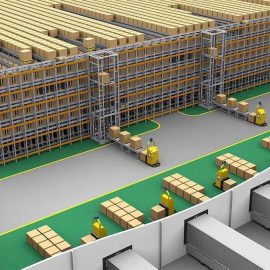
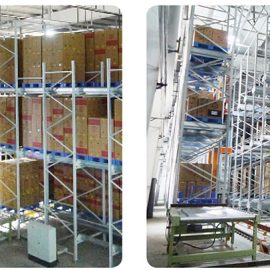
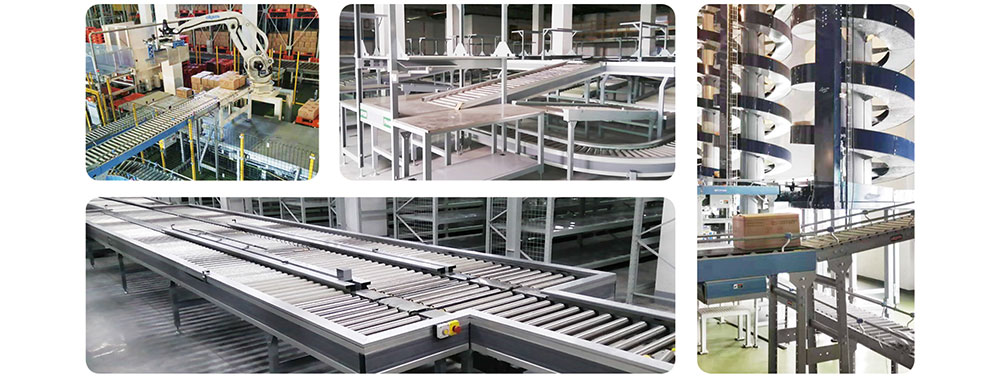
Box conveyor and sorting systems typically include multi-V belt roller conveyors, multi-V belt curve roller conveyors, and roller line conveyors. They are widely used in the logistics industry for conveying, sorting, storing, and collecting empty containers of objects and containers. They must also be flexibly configured to meet specific user requirements and site conditions, adapting the system to the process flow. Through various sensors and information input devices, the control system processes and monitors the movement of objects in real time, enabling data collection, communication, and host computer management. These systems feature a simple structure, high reliability, and ease of use and maintenance.
Hoist:
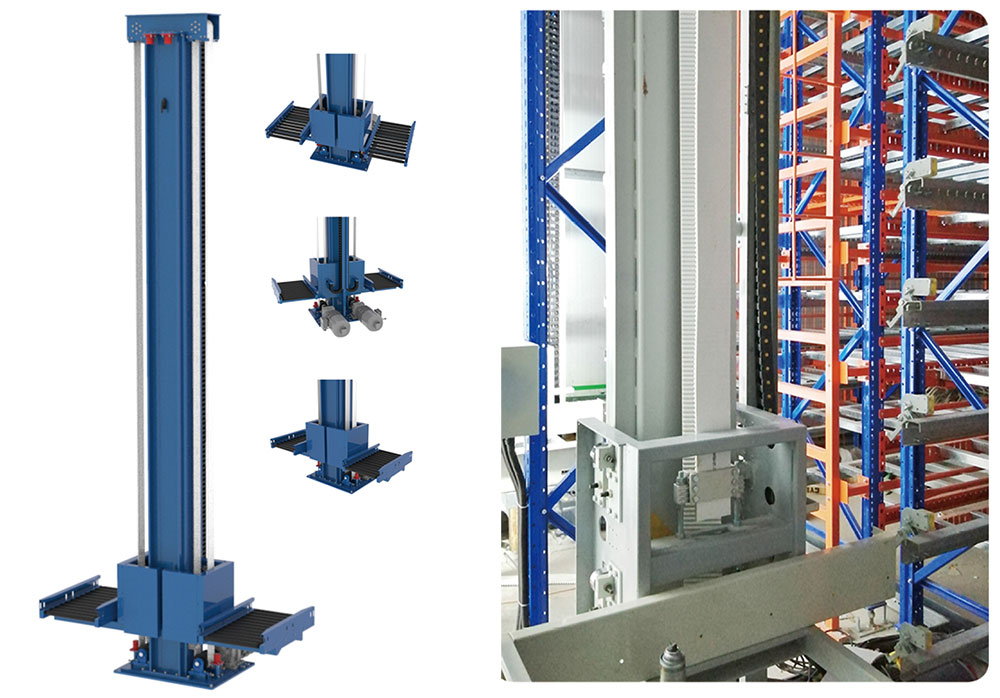
The hoist is responsible for vertical material handling and vehicle level change. Chain hoist: The hoist uses chains instead of wire ropes, eliminating problems often encountered with traditional hoists, such as broken strands or significant deformation, and ensuring the hoist’s safety and stability. Dual braking: One is a QR code system, and the other is an encoder on the motor. This ensures reliable braking information, ensuring stable operation of the hoist platform and preventing top and bottoming accidents. A buffer mechanism is designed at the front of the hoist, allowing both cargo transportation and a four-way vehicle access path, improving efficiency.