0
-
An empty cart
You have no item in your shopping cart

System Functions:
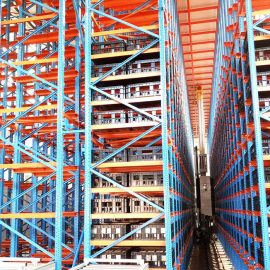
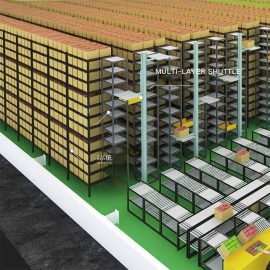
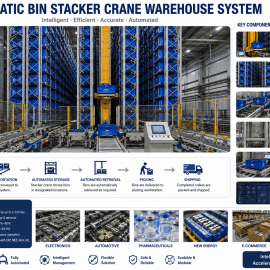
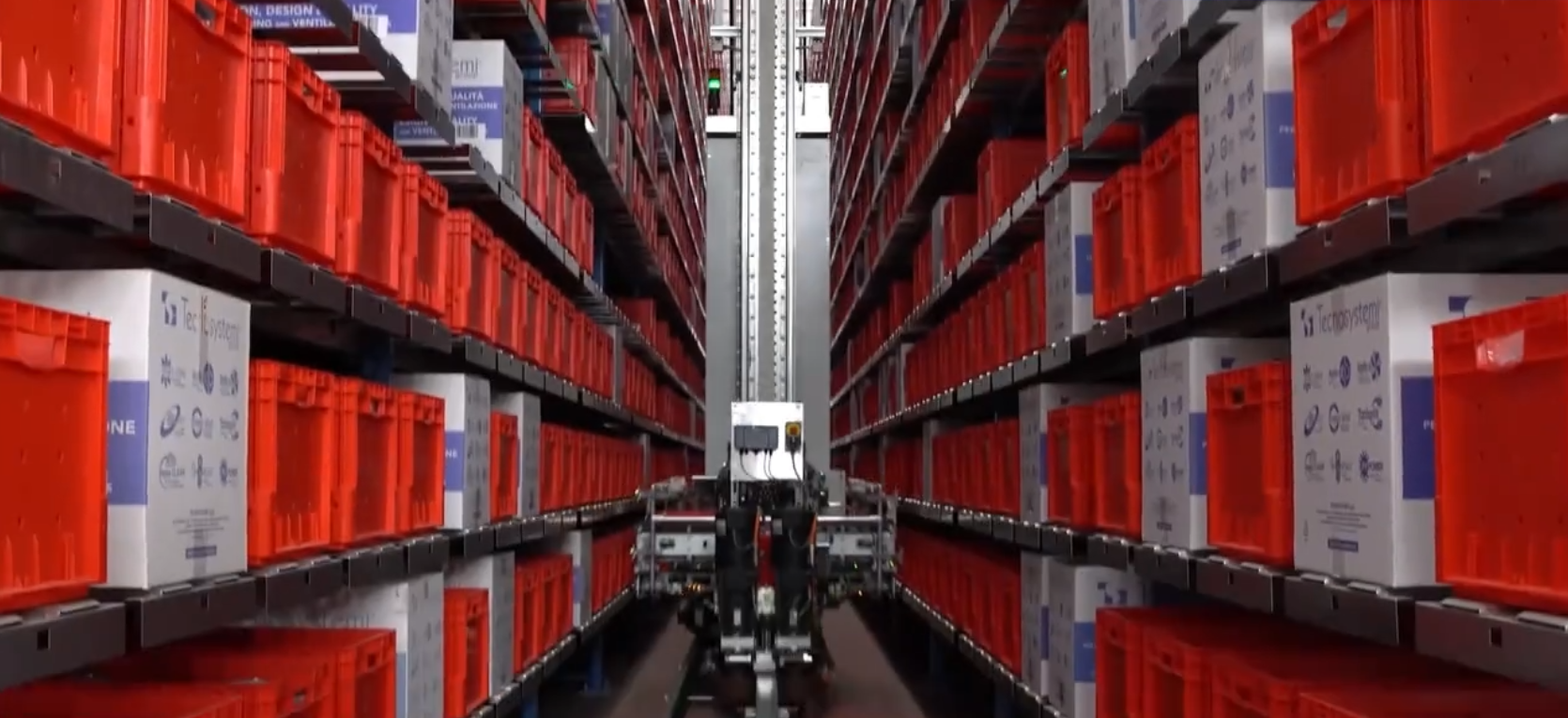
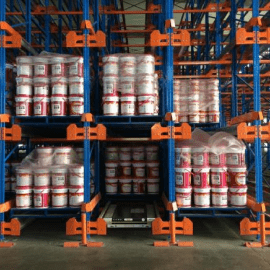
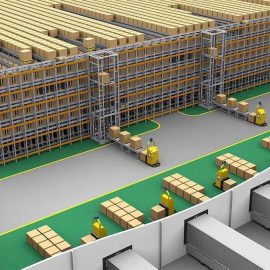
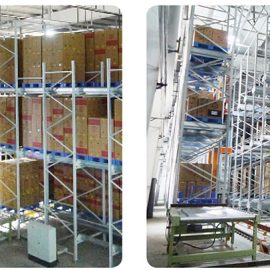
Stacker cranes are automated material handling equipment, the core equipment of automated warehouses (AS/RS). AS/RS can improve the utilization rate of warehouse space, increase labor productivity, reduce labor intensity and production costs; reduce errors in goods and information processing; and provide reasonable and effective inventory management and control. They can better meet the needs of special storage environments, improve operational quality, ensure the safety of goods throughout the storage process, and facilitate overall system optimization.
Equipment Advantages:
Versatile, flexible, reliable, and stable;
Available with both straight-rail and rotary-rail technologies supporting cold storage at -25°C;
Available with single-deep and double-deep models featuring frequency conversion drive, offering excellent start-stop and operational performance.
With increasingly scarce land resources and continuously rising warehousing demand, achieving efficient storage and turnover of goods within limited space has become a key issue for enterprises to reduce costs and increase efficiency. Stacker crane automated warehouses (AS/RS) operate on the core logic of “utilizing height for space and improving efficiency through automation.” Through the collaborative operation of high-rise racking and intelligent stacker cranes, they construct a highly efficient warehousing system that combines high-density storage with precise operations, providing a preferred solution for overcoming warehousing bottlenecks in industries such as manufacturing, logistics, and e-commerce.
Stacker crane AS/RS have redefined the standard of warehousing efficiency with their comprehensive advantages. In the same space, they can accommodate more goods; they can easily handle order pressures; and in terms of precision, they far surpass manual operations. This significant advantage makes them a core solution for enterprises to overcome warehousing challenges.
I. Space Utilization: Far Exceeding Traditional Warehouses, Significantly Reducing Land Costs
Traditional flat warehouses utilize space in a relatively crude manner. Limited by the height of manual access, racking can only be low-level, and forklift aisles occupy a large amount of space, resulting in low space utilization.
Stacker crane automated warehouses (AS/RS) excel at space utilization. By overcoming height limitations and compressing aisle width through high-rise racking, they significantly increase storage capacity per unit area, saving businesses substantial land rental costs.
II. Operational Efficiency: Freeing from Manual Labor and Easily Handling Order Peaks
Traditional warehouses are significantly limited by manual labor. The number of orders that can be processed manually is limited, and even with increased manpower, it’s difficult to meet demand during peak order periods, and errors due to fatigue are common.
Stacker crane AS/RS, relying on automated operation, is unaffected by human effort, enabling continuous and efficient order processing and maintaining stable delivery efficiency even during peak order periods.
III. Error Rate and Management: System-Ensured Precision and More Efficient Management
Traditional warehouses rely on manual management. Goods receiving, shipping, and inventory checks are all done manually, which is not only time-consuming but also has a high error rate, potentially leading to losses for the business.
Stacker crane AS/RS achieves intelligent management through a system. Receiving and shipping are precisely scheduled by the system, and inventory checks are fast and efficient, significantly reducing error rates and avoiding problems caused by incorrect orders.
IV. Hardware and Systems: Stable Collaboration and High Availability
Traditional warehouses suffer from fragmented equipment and a lack of coordination between devices. A malfunction in one piece of equipment can impact the operation of a large area, and maintenance costs are high.
Stacker crane automated warehouses (AS/RS), on the other hand, operate as a systematic system. Their hardware is reliable, and combined with an intelligent system, they can automatically avoid faults and optimize routes, resulting in significantly higher overall availability than traditional warehouses.
V. Scenario Adaptability: Precisely Addressing the Pain Points of Traditional Warehouses
In manufacturing raw material warehouses, traditional warehouses struggle to effectively implement “first-in, first-out” (FIFO) operations. Stacker crane AS/RS, through precise system management, improves raw material turnover efficiency.
In cold chain warehouses, manual sorting efficiency is greatly affected by the environment, while stacker cranes can operate stably in low-temperature environments, ensuring efficient sorting.
In e-commerce regional warehouses, traditional warehouses suffer from low manual picking efficiency. Stacker crane AS/RS, through a “goods-to-person” model, significantly improves picking efficiency.
VI. Long-Term Costs: Advantages Gradually Emerge After Initial Investment
The hidden costs of traditional warehouses are often overlooked. Labor and equipment maintenance costs are incurred continuously and increase over time. While the initial investment in stacker crane automated warehouses (AS/RS) is relatively high, their operating costs are low and stable, resulting in significant long-term cost savings for businesses. The advantages become more pronounced over time.
From space to efficiency, from cost to management, stacker crane AS/RS offer significant advantages over traditional methods. While traditional warehouses are still struggling with the question of “can we store anything?”, AS/RS are already achieving “more efficient, cheaper, and more reliable storage.” For companies seeking supply chain competitiveness, choosing a stacker crane AS/RS is an inevitable choice in line with the efficiency revolution.
The high efficiency of stacker crane AS/RS is a core characteristic ingrained in every operational—from a 3-5 times increase in space utilization to precise storage and retrieval rates of several times per minute; from 24/7 uninterrupted operation to data-driven, zero-error inventory management. It’s not just about “stacking goods higher,” but about reconstructing warehousing logic with automation, making every inch of space productive and saving time with every turnover. For companies eager to gain a competitive edge in the supply chain, choosing such an efficient storage solution means choosing to shorten the turnover cycle with technology and reduce operating costs with intelligence, making warehousing a true “efficient engine” for accelerating the company’s progress and maintaining a competitive edge in the fierce market competition.