

Applications of Automated Warehousing in the Pharmaceutical Industry
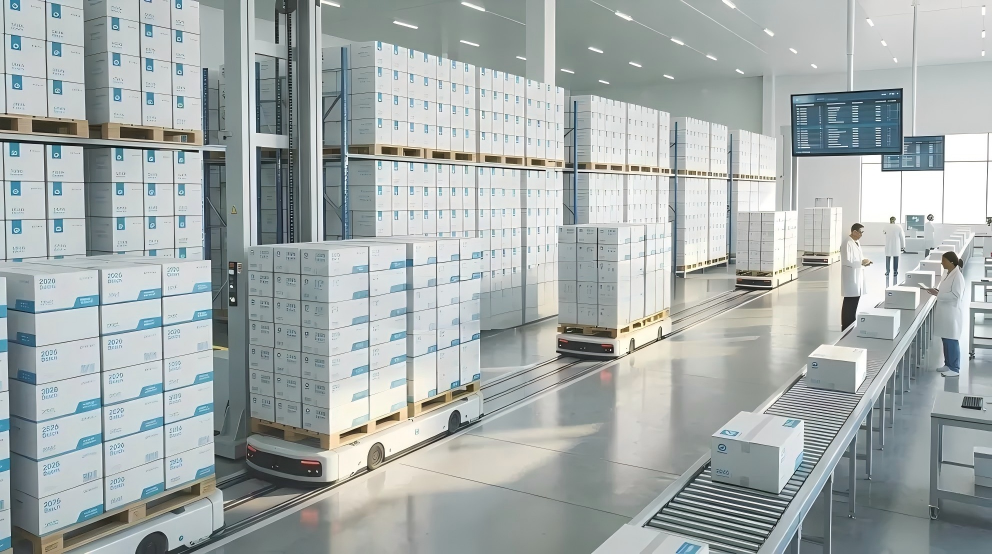
As the pharmaceutical industry continues to demand higher standards for product quality, traceability, inventory management, operational efficiency, and regulatory compliance, Automated Storage and Retrieval Systems (自動化/RS) have become a critical infrastructure component for pharmaceutical manufacturers, drug distributors, biopharmaceutical companies, and medical device manufacturers.
1. Why Does the Pharmaceutical Industry Need Automated Warehouses?
Pharmaceutical products have unique characteristics:
Large number of SKUs and complex inventory management
Strict batch and lot control requirements
先進先出 (First-In, First-Out) or FEFO (First-Expired, First-Out) inventory management
High requirements for temperature and humidity control
Full product traceability throughout the supply chain
High costs associated with human errors
Strict compliance with GMP and GSP regulations
Automated warehouse systems effectively address these challenges.
2. Main Applications of Automated Warehouses in the Pharmaceutical Industry
2.1 Raw Material Warehouses
Used for storing:
Active Pharmaceutical Ingredients (APIs)
Chemical raw materials
Excipients
Packaging materials
Typical equipment includes:
AS/RS stacker crane systems
Conveyor systems
AGV forklifts
倉庫管理系統 (Warehouse Management System)
Benefits:
Automated receiving and storage
Batch and lot traceability
Reduced contamination risks from manual handling
提高庫存準確性
2.2 Finished Pharmaceutical Product Warehouses
Suitable for:
Tablets
Capsules
Injectable drugs
Oral liquid medicines
Common warehouse configurations:
Pallet-Based AS/RS Warehouse
Designed for full-pallet storage of finished pharmaceutical products.
Typical specifications:
Warehouse height: 15–40 meters
Capacity: 5,000–100,000+ pallet locations
Bin and Tote-Based Automated Warehouse
Used for piece-picking and order fulfillment operations.
Equipment includes:
Miniload stacker cranes
Multi-shuttle systems
Robotic tote handling systems
Benefits:
Fast order picking
Automatic replenishment
3–5 times higher order processing efficiency
2.3 Pharmaceutical Cold Storage Automated Warehouses
Primarily used for:
Vaccines
Blood products
Biopharmaceuticals
Insulin
Cell and gene therapy products
Typical temperature ranges:
2°C to 8°C
-20°C
-40°C
-80°C
System configurations:
Automated stacker cranes
Four-way shuttle systems
AGV forklifts
Benefits:
Minimized personnel entry into cold environments
Reduced refrigeration energy loss
Increased operational efficiency
Stable temperature control and product integrity
2.4 Pharmaceutical Distribution Centers (DCs)
Widely adopted by pharmaceutical wholesalers and distributors.
Key functions:
Automated receiving
自動儲存
Automated picking
自動分類
Automated shipping
Operational capability:
Tens of thousands to hundreds of thousands of orders processed daily
3. Common Automated Warehouse Solutions for the Pharmaceutical Industry
解決方案 1: AS/RS Stacker Crane Warehouse
Suitable for:
Pharmaceutical raw materials
Finished drugs
Medical devices
特徵:
High storage density
Reliable operation
Ideal for large-volume inventory storage
Typical height:
15–45 meters
解決方案 2: Four-Way Shuttle System
Suitable for:
High SKU diversity
High-frequency inbound and outbound operations
特徵:
Flexible scalability
Lower initial investment
Easy phased expansion
Advantages:
More than 30% increase in storage density
2–5 times improvement in operational efficiency
解決方案 3: Miniload Automated Warehouse
Suitable for:
Small-package pharmaceuticals
Pharmaceutical e-commerce fulfillment
特徵:
High-speed picking
Automatic replenishment
Accurate inventory control
Performance:
Hundreds to thousands of tote movements per hour
解決方案 4: AGV Autonomous Forklift System
Suitable for:
Production-to-warehouse transportation
Raw material delivery
Finished product transfer
Advantages:
24/7 手術
Reduced labor requirements
Improved workplace safety
4. Benefits of Automated Warehouses for Pharmaceutical Companies
Item Improvement
Storage Space Utilization 3–5 times
Labor Costs Reduced by 50–80%
Shipping Efficiency Improved by 2–5 times
Inventory Accuracy ≥ 99.9%
Batch Traceability 100% traceable
Temperature Control Continuous monitoring
GMP/GSP Compliance Significantly enhanced
5. Typical Components of a Pharmaceutical Automated Warehouse
A large pharmaceutical automated warehouse project typically includes:
Automated storage racks
AS/RS stacker crane systems
Conveyor systems
AGV autonomous forklifts
Four-way shuttle systems
Vertical lifts and elevators
Automatic stretch wrapping machines
倉庫管理系統 (Warehouse Management System)
世界CS (倉庫控制系統)
ERP/MES integration interfaces
Temperature and humidity monitoring systems
RFID traceability systems